
17 Article
 RGB LED strip, strip light, 150 LEDs, length 400 cmDelivery 1-3 days
- LED fairy lights, stripes, living room, white, L 200 cmDelivery 3-6 days
- RGB LED fairy lights, stripes, remote control, set of 5Delivery 3-6 days
- LED fairy lights Stripe, white, motion detector, L 240 cmDelivery 3-6 days
- RGB LED fairy lights, stripe, remote control, L 500 cmDelivery 3-6 days
- LED strip, metal, white, cable reel, IP65, L 25 mDelivery 2-4 days
- LED Stripe, aluminium, white, cable reel, IP65, L 10 mDelivery 2-4 days
- LED fairy lights, stripe, CCT, dimmer, remote controlDelivery 3-6 days

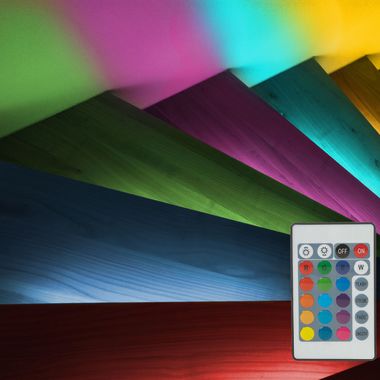

LED strips – Flexible lighting for every living space
Modern lighting design is far more than simply switching a ceiling light on and off. With high-quality LED strips, you can showcase rooms in a targeted way and visually highlight individual areas. Whether as a subtle accent or as the centrepiece of your interior design: these flexible light strips offer countless possibilities for creating an atmosphere that reflects your mood. In this guide, you’ll learn how to use smart LED lighting systems and decorative lights to transform your home into an oasis of well-being – from planning right through to perfect installation.
LED strips for indirect indoor lighting
Indirect lighting is the secret to high-quality interior design. It prevents harsh shadows and provides a diffused, glare-free light that makes the room appear more spacious. When positioned behind a television and set correctly, LED strips reduce the stark contrast in brightness between the screen and a dark wall, which is easier on the eyes during long film nights. Under shelves or sideboards, LED strips highlight the contours of the furniture without shining directly into your line of sight.
They also prove invaluable in the kitchen: fitted beneath wall units, they illuminate the worktop and make it easier to find your way around. In hallways or along staircases, they serve as an aesthetic guide. Anyone seeking the highest quality of light should consider a modern COB LED strip. Thanks to the high LED density on the strip, there are no visible light points, creating a homogeneous strip of light that appears almost as if cast from a single mould.
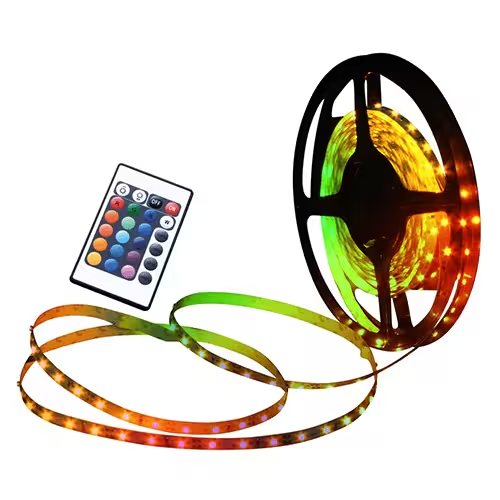
RGB LED strips and different light colours
The choice of colour temperature is crucial for the ambience of a room. Whilst warm white light (2700 to 3000 K) conveys a sense of cosiness, neutral white (4000 K) or cool white (6000 K) tones promote concentration. RGB systems go one step further and allow for coloured accents. By integrating them into smart lighting concepts, it is now even possible to create interactive LED light shows that react to music and on-screen content at parties or whilst gaming.
RGBW and CCT – what’s the difference?
When choosing the technology, you’ll often come across the terms RGBW and CCT:
- RGBW: These strips combine red, green, blue and a dedicated white chip. This allows you to produce both vibrant colours and a clean, true white without any colour cast.
- CCT ( Correlated Colour Temperature): Here, the focus is on the adjustability of white tones. You can choose seamlessly between warm candlelight and cool daylight to support your circadian rhythm.
Outdoor LED strips
You can also use suitable LED strips on patios, balconies and in sheltered garden areas. To ensure the installation can withstand the weather conditions, an IP65 water resistance rating is essential. This protects the electronics from water jets and dust. Solar-powered LEDs are also a good option for garden owners, as they operate completely independently without the need for power cables. However, those wishing to illuminate large areas on a permanent basis often opt for systems with a 230 V supply voltage, which can cover long distances without any significant drop in voltage.
Tip 1: Conceal the light source cleverly
To perfect the modern look, you should never install the strips in full view. Aluminium profiles with a diffused cover ensure even light distribution. They also help with heat dissipation, which significantly extends the lifespan of the LEDs.
Tip 2: Match the length to the power supply
Measure the required length precisely before installation. Many LED strips have marked cutting points where they can be trimmed. Ensure that the power supply unit and voltage (e.g. 12V, 24V or 230V) are correctly rated to prevent overheating.
Tip 3: Using LED strips as Christmas lighting
Run warm white LED strips along window frames. You can also attach them to shelves or behind a chest of drawers with fir branches and Christmas figurines. This festive decorative lighting creates a particularly atmospheric effect when combined with other smart fairy lights.
Frequently asked questions
Can LED strips be cut to size?
Many LED strips have marked cutting points. Only cut them at the designated points, as otherwise the circuit will be broken and entire segments may stop working.
Are all LED strips dimmable?
No. Dimmability depends on the model and the control system used. With smart home-compatible systems, the dimming function is usually integrated directly into the app control.
Which LED strips are suitable for the living room?
Warm white or CCT models are ideal for creating a pleasant ambient light. RGB variants add colourful accents that can be customised via the app.
Can LED strips be used in the bathroom?
Yes, provided the protection rating and installation method meet the requirements of the specific bathroom area. Additional electrical safety regulations apply in certain areas. Ensure high IP protection ratings are used in areas in close proximity to water.