
By solutions
- Car park lighting
- Exhibition lighting
- Gallery lighting
- Gastronomy lighting
- Hall lighting
- Hotel lighting
- Industrial lighting
- Office lighting
- Practice lighting
- Restaurant lighting
- Safety lighting
- Shop lighting
- Shop window lighting
- Site lighting
- Stable lighting
- Staircase lighting
- Warehouse lighting
- Workplace lighting
192 Article
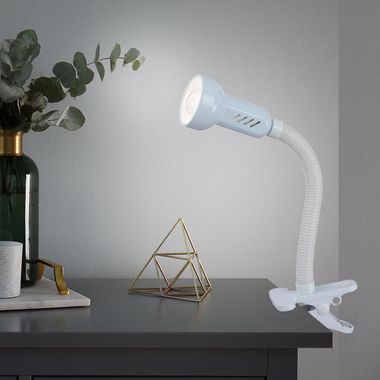 Clamp light, Flexo-arm, white, H max. 48 cmDelivery 1-3 days
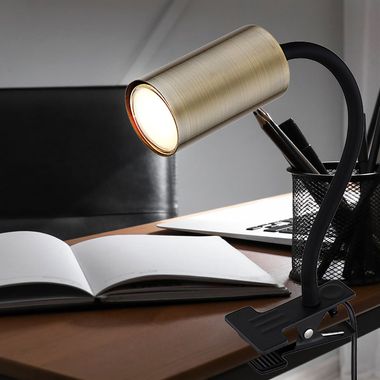 Clamp lamp, antique brass, flexible arm, black, H 41.5 cmDelivery 1-3 days
- LED table lamp, bracket, flexo, nickel matt, H 17.5cmDelivery 1-3 days
- LED table lamp, clamp, movable spotlight, red, H 34cmDelivery 1-3 days
- LED table lamp, touch dimmer, movable, imitation leather, H 50cmDelivery 1-3 days
- CARME LED pendant light, silver, metal and glass, warm white, D 87 cmDelivery 1-3 days
- 55%
- LED pendant light, chrome, satin, height adjustable, L 98.5 cmDelivery 1-3 days
- Modern table lamp made of metal silver - BASICDelivery 1-3 days
- LED table lamp, grey, rotary dimmer, touch, CCT, H 53 cmDelivery 1-3 days
- LED pendant light, chrome clear acrylic, W 80 cmDelivery 1-3 days
- LED table lamp, Flexo arm, metal, glass, white, H 34cmDelivery 1-3 days
- 49%
- LED clamp light white, 3 levels touch dimmer, H 35 cmDelivery 3-6 days
- Send 4 watt LED table lamp in matt nickelDelivery 3-6 days
- VT-44300-B LED outdoor wall spotlight, adjustable, IP65, L 49.6 cmDelivery 6-8 days
- Send 4 watt LED table lamp in antique brassDelivery 3-6 days
- Clamp lamp, graphite, wood look, black, flexible arm, H 41.5 cmDelivery 1-3 days
- Table lamp, metal, joint, black, H 62 cmDelivery 1-3 days
- VT-50185 LED outdoor spotlight, wall light, black, aluminium, glassDelivery 6-8 days
- LED table lamp, Flexo, steel coloured, toggle switch, H 30 cmDelivery 3-6 days
- LED hanging light, aluminum gold, L 100 cmDelivery 3-6 days
- LED hanging light, aluminum white, L 100 cmDelivery 3-6 days
- LED hanging lamp, dimmable, black, height adjustable, L 155 cmDelivery 3-6 days
- LED hanging light, aluminum white, L 100 cmDelivery 3-6 days
- LED hanging light, aluminum gold, L 110 cmDelivery 3-6 days
- LED table lamp, touch dimmer, CCT, wireless charging, H 61.5 cmDelivery 3-6 days
- LED hanging light, aluminum gold, L 100 cmDelivery 3-6 days
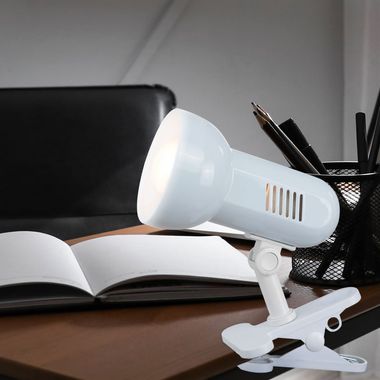
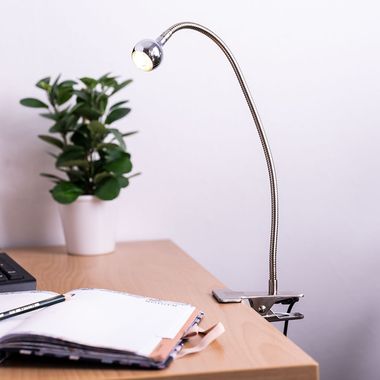
Workplace lighting - See clearly, think better
Good lighting at the workplace is crucial for concentration, mood and productivity. Anyone who works in poor lighting knows the problem: your eyes burn, your neck hurts and your energy levels drop. But that doesn't have to be the case. Well thought-out workplace lighting - especially ergonomic lighting - not only improves vision, but also well-being. Find out here what is important when making a choice - and how to optimise your workplace lighting, whether in the office or home office.
Why is the right workplace lighting so important?
Many people underestimate how strongly light influences the working day. Rooms that are too dark quickly lead to tiredness. If the light flickers or dazzles, headaches are not long in coming. Your eyes react sensitively to poor conditions. They tire more quickly, vision becomes blurred and thinking becomes sluggish.
Fact: People take in around 80 % of all information through their eyes. Poor lighting conditions slow down this process.
Feeling: People who work with a lack of light feel permanently stressed - even without a clear reason.
Ergonomic lighting protects the eyes, prevents tension and noticeably increases performance - regardless of whether you are sitting in the office or working from home.
Requirements for good workplace lighting
Not every lamp is suitable for every workplace. It depends on several factors:
Light colour and colour temperature
Choose neutral white light (approx. 4000 Kelvin) for concentrated work. It has an activating effect without dazzling. Daylight white is suitable for creative tasks and manual work.
Illuminance
Depending on the size of the workstation, around 1000 lumens is a sensible guideline for good workplace lighting. For activities that require particularly fine concentration - such as drawing, handicrafts or assembly work - it can be significantly higher. The decisive factor is that the light is distributed evenly without causing glare.
Tip: When making your choice, look for a high lumen output in combination with a neutral white light colour - this ensures clear vision and increases working comfort.
Glare-free lighting
Avoid harsh contrasts. Direct light on the screen leads to reflections. Indirect light sources or luminaires with diffusers are ideal. The eyes remain relaxed because they do not have to constantly adapt to changing brightness levels.
All these factors combined result in ergonomic lighting that supports your health and improves working comfort.
Tips for healthy workplace lighting
Use daylight
Position your desk as close to the window as possible - at the side, not at the front or directly behind. This avoids glare and makes optimum use of natural light. Combine it with artificial lighting to create even conditions even on dark days.
Customise the light
Use lights with a dimmer or changeable light colour. Everyone perceives brightness differently. Customisable lighting gives you back control.
Tip: Desk lights with a touch dimmer allow you to conveniently adjust the brightness by touch.
Combine several light sources
Don't rely on a single lamp. A combination of ambient lighting, zone lighting and desk lamps ensures balance - the basis of all ergonomic lighting.
Example of an optimum combination:
- Ceiling light with wide light distribution
- Floor lamp for indirect lighting
- Desk lamp for spotlighting
Which lights are suitable for the workplace?
Desk lights
Compact, flexible, focussed - desk lamps can be directed specifically onto work surfaces. Look out for models with an adjustable arm to direct light exactly where you need it.
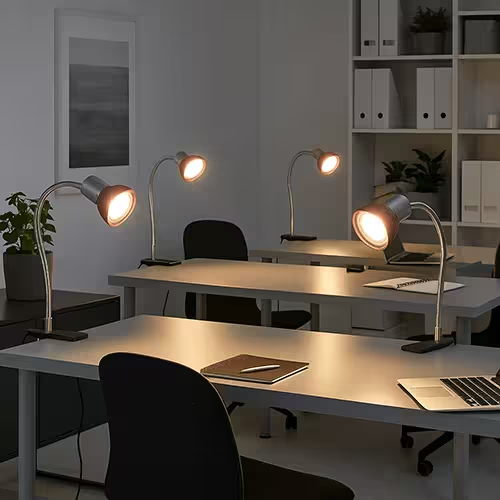
Recommendation: LED desk lights with high colour rendering (CRI > 80) provide natural light that is easy on the eyes - an important part of any ergonomic lighting in the home office or office.
Pendant luminaires
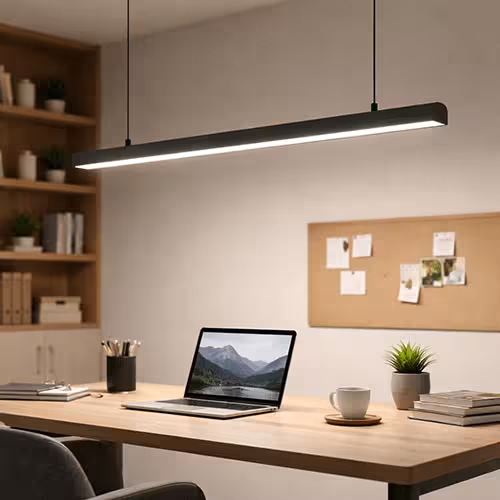
They are indispensable in offices with several workstations. Pendant luminaires are particularly suitable for meeting tables or creative areas. They provide wide-area light and can be adjusted in height and position.
Avoid mistakes - these are the most common lighting problems
1. direct light onto the screen
→ If the light is reflected, it strains the eyes. Position lights to the side.
2. use only one light source
→ The room appears restless, the eyes have to constantly readjust.
3. wrong light colour
→ Warm white (below 3300 K) has a relaxing effect - good for living rooms, unsuitable for concentrated work.
4. dark corners and hard shadows
→ Bright, uniform illumination of the entire workplace creates harmony and prevents overexertion.
Workplace lighting for home office & office - what to look out for?
In the home office
At home, there is often a lack of professional lighting solutions. But here too, investment pays off:
- Flexible desk lamp with adjustable light colour
- Additional light for background lighting
- Good ambient lighting in the room
Well thought-out, ergonomic lighting in the home office helps you to work in a focussed and healthy manner - even during long days at the laptop.
Tip: If you take part in long video conferences, you should ensure even lighting - this looks more professional and is easier on the eyes.
In the open-plan office
Here, light not only affects the individual, but the whole team. Uniform, glare-free light promotes teamwork and reduces errors.
- Ceiling washlights with high light output
- Task lights for individual needs
- Uniform illumination without harsh transitions
Intelligent LED lighting - efficient, modern and sustainable
LED lights not only offer a long service life, but also impress with their high quality of light. Many models can be controlled via an app or smart home system. Dimming, changing the light colour or setting schedules - all at the click of a button.
Tip: Light control according to the time of day (circadian light) automatically adapts the lighting to the biorhythm. This improves performance and sleep quality - whether in the office or at home.
Invest in your well-being
A well-lit workplace means more than just brightness. It increases concentration, protects your eyes and makes work more enjoyable. With the right combination of direct and indirect light, the right colour temperature and flexible light sources, you can create an environment in which you enjoy working - day after day. Whether in an open-plan office or a home office: ergonomic lighting pays off.
Find the right lighting for your workplace in our selection!
Frequently asked questions
Which light colour is ideal for working?
Neutral white (approx. 4000 Kelvin) has an activating effect and is easy on the eyes. Daylight white (from 6000 Kelvin) is suitable for very precise work.
Which lamp is suitable for long periods of screen work?
LED desk lamps with high colour rendering (CRI > 80), adjustable light colour and no glare are ideal. This ensures a clear view, even when working at the monitor for hours on end.
How do I prevent glare on the screen?
Position lights to the side, not the front. Use glare-free lights with a diffuser.
Which lamp is suitable for video conferencing in the home office?
An LED light with even illumination from the front improves the image quality and looks professional.
Why are several light sources useful?
They create harmonious lighting conditions. The eye doesn't have to constantly adjust - this reduces fatigue.